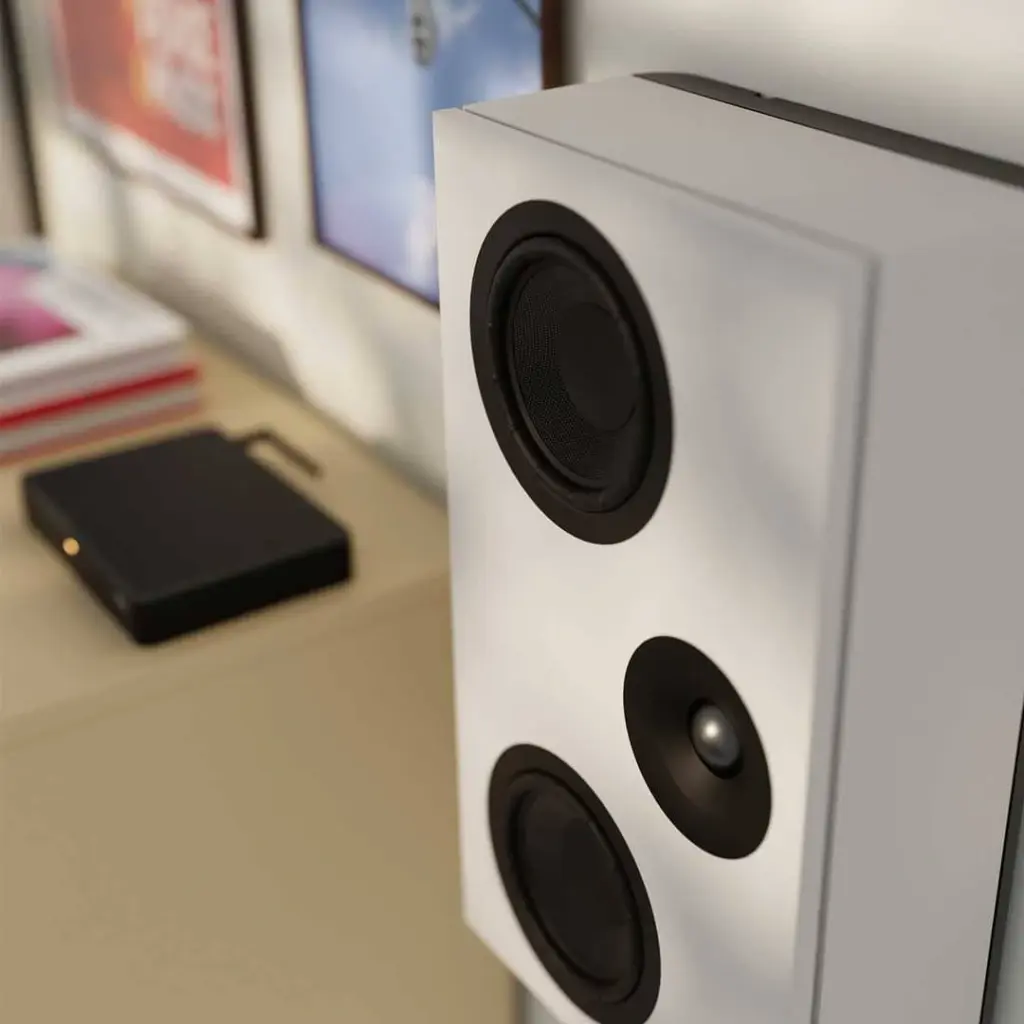
HighQuality music streaming
Ole Witthøft
Music streaming has undergone a revolutionary transformation. Where streaming once was primarily about access and convenience, sound quality has today become a decisive competitive factor. Faster internet connections and improved technology have made it possible to stream music in lossless and High-Resolution quality – without compromise.
Today, streaming is no longer an alternative to physical media or downloads. For many music lovers, it has become the primary – and often the best – way to experience music.
The sound quality of a streaming service is determined by several technical factors. For the sake of simplicity, we refer here to kbps (kilobits per second), which is a unit of data transfer.
In the early days of streaming, audio quality was a disappointing 96–160 kbps. Today, you can stream up to 9,216 kbps directly from your smartphone. This represents a remarkable technological leap in just 20 years, making exceptional sound quality accessible to everyone – provided you have a music system capable of handling the data.
| Level | Typical formats | Specification | Characteristics |
| Lossy | Ogg Vorbis, AAC | Up to 320 kbps | Efficient, but with data loss |
| CD quality | FLAC / ALAC | 1,411 kbps | Lossless |
| High Resolution | FLAC / ALAC | Up to 9,216 kbps | Extended resolution and dynamics |
Lossless means that the music is delivered without any loss of information compared to the master file. High Resolution further expands the technical resolution but also places higher demands on both the player and the speakers.
It is not only the audio format that matters. How the music is transported from the streaming service to the playback device is crucial for stability, noise levels, and the overall listening experience.
There are essentially two streaming architectures:
The second approach typically provides:
Spotify Lossless – focus on stability and compatibility
Spotify is the world’s largest streaming platform and has taken an important step away from lossy streaming with the introduction of Lossless quality in FLAC (CD quality).
Spotify Lossless offers:
Spotify prioritizes universal compatibility, fast app responsiveness, and ease of use over extreme High- Resolution specifications. The result is a solution that works reliably almost everywhere.
Qobuz is aimed at music lovers who seek maximum sound quality. The service streams FLAC up to 24bit / 192 kHz and offers a wide catalog in High Resolution. 
With Qobuz Connect, compatible players can:
Qobuz Connect is designed with signal integrity in mind and is particularly well suited for stationary hifi systems.
Apple Music offers lossless and High-Resolution streaming in ALAC up to 24bit / 192 kHz but does not use a classic Connect model.
In Apple’s solution:
The advantage is high stability and exceptional ease of use for Apple users. The downside is that the signal path often involves multiple stages, and thirdparty hardware depends on Apple’s implementation.
Apple Music prioritizes integration and simplicity over an open, platformindependent Connect architecture.
Tidal streams FLAC from CD quality up to 24bit / 192 kHz and has moved away from proprietary solutions toward more open standards.
Tidal does not offer a single, unified “Tidal Connect” platform, but provides:
In practice, Tidal behaves like a Connectstyle solution in many systems, even though implementation varies between manufacturers.
| Service | Codec | Max quality | Connect principle |
| Spotify | FLAC | CD quality | Central Spotify Connect |
| Qobuz | FLAC | 24bit / 192 kHz | Qobuz Connect |
| Apple Music | ALAC | 24bit / 192 kHz | AirPlay / ecosystemcontrolled |
| Tidal | FLAC | 24bit / 192 kHz | Manufacturerdependent integration |
Choosing a streaming service is not only about numbers and specifications, but about how music is delivered in practice:
Music streaming is now a mature technology, where differences lie not only in audio formats, but in the entire technical architecture behind playback. Lossless and High Resolution have become everyday standards.
To fully realize the potential of modern music streaming, a music system designed specifically for this purpose is required. Silverback is System Audio’s wireless and awardwinning music system, created to handle all the streaming services and technologies described in this guide.
Silverback supports lossy, lossless, and High-Resolution streaming and is built for Connectbased playback, where the system itself streams music directly from the service. This ensures stable playback, high sound quality, and a simple user experience – whether you choose Spotify, Qobuz, Tidal, or Apple Music.
With Silverback, technology becomes an invisible partner, allowing you to focus on what truly matters: music.
Spotify is the most widely used streaming service in the world, known for its vast music catalog, intelligent recommendations, and broad compatibility. With the introduction of Spotify Lossless, the service has moved significantly closer to audiophile solutions.
Spotify Connect allows playback to be controlled from a smartphone or tablet, while the stream itself is delivered directly to the player. This provides stable and consistent experience across devices and systems. Spotify is particularly well suited for users who want maximum flexibility, fast responsiveness, and seamless everyday integration.
Qobuz consistently prioritizes audio quality. The service streams FLAC up to 24bit / 192 kHz and offers a large catalog of High-Resolution music.
With Qobuz Connect, compatible music systems can stream directly from Qobuz servers without relying on a phone or computer as the audio source. The result is a bitperfect signal path and a listening experience that remains extremely close to the original master recording. Qobuz appeals especially to listeners seeking maximum detail and a pure HiFi experience.
Tidal offers streaming in FLAC from CD quality to High-Resolution and focuses on both sound quality and music curation. The service is widely integrated into many network players and music systems.
Although Tidal does not have a single unified Connect standard, playback in many systems follows the same principle: the player streams music directly, while the mobile device mainly serves as a controller. This makes Tidal an excellent choice for users with dedicated hifi systems who want flexibility and high sound quality without being locked into a single ecosystem.
Apple Music delivers lossless and High-Resolution streaming in ALAC up to 24bit / 192 kHz and is deeply integrated into Apple’s hardware and software. Playback often takes place via an iPhone, iPad, or Mac, which sends the audio signal to the music system using AirPlay or AirPlay 2.
Apple Music is known for its ease of use and stable playback, especially for users already invested in the Apple ecosystem. While the service is less open than classic Connect solutions, it offers a simple and wellintegrated streaming experience with high sound quality.
Although all four services offer highquality music streaming, they represent different approaches:
What they all share is that – together with a music system like Silverback – they make it possible to experience music streaming at a level that, just a few years ago, was reserved for advanced and expensive HiFi systems.