Life-changing songs Christmas 2025
Ole Witthøft
Welcome to our musical Christmas calendar! Every day in December we open a new door with an iconic song, a surprising fun fact and a little story from System Audio.
We post a new story about a life-changing song on Facebook and Instagram.
On this page we daily update we the latest song.
Enjoy the songs on Spotify
Enjoy the songs on Tidal
A comparison of audio technologies
Inspirations to music lovers in a digital world
 December 1: “Bohemian Rhapsody” – Queen (1975)
A song without a chorus, but with opera, rock, and ballad all in one. Freddie Mercury wrote it as a mini-opera, and the production required over 180 overdubs – so many that the tapes became almost transparent.
EMI thought it was too long for radio, but Queen insisted.
The result? A global hit, an iconic music video, and a song that changed pop culture.
Fun fact: The final piano chord lasts over 40 seconds.
 December 2: “Billie Jean” – Michael Jackson (1982)
Quincy Jones and Jackson spent days perfecting the drum sound. The iconic bassline was recorded with a drum machine and analog synths – and became the foundation of the Thriller sound.
Fun fact: Jackson performed the moonwalk for the first time to this song.
 December 3: “Take Five” – Dave Brubeck Quartet (1959)
A jazz classic in 5/4 time – highly unusual back then. Produced by Teo Macero, who also worked with Miles Davis. It became one of the best-selling jazz singles ever.
Fun fact: It was written as an exercise in odd time signatures.
 December 4: “Clair de Lune” – Claude Debussy (1905)
A classical gem that has inspired everything from film to electronic music.
Fun fact: The name means “Moonlight.”
 December 5: “God Only Knows” – The Beach Boys (1966)
Brian Wilson used harp, French horn, and complex harmonies – creating one of pop history’s most beautiful productions.
Fun fact: Paul McCartney called it “the best pop production ever.”

 December 6: “Hyperballad” – Björk (1995)
Björk recorded parts of the vocals outdoors to capture the atmosphere.
Electronic music meets Icelandic poetry. Björk and Mark Bell from LFO created a sound that feels both futuristic and organic.
 December 7: “A Day in the Life” – The Beatles (1967)
Two songs merged with an orchestral crescendo and a piano chord that lasts 40 seconds.
The orchestra was told to “play as loud as possible.”
This is our musical Christmas calendar with 24 songs and 24 stories about sound that have formed our lives.
 December 8: “Around the World” – Daft Punk (1997)
One phrase repeated 144 times – but hypnotic and with just the right beat. The music video visualizes each instrument as a dancer. The song was written by Guy-Manuel de Homem-Christo and Thomas Bangalter while working on their debut album, Homework, in their home studio in Paris.
They took a minimalist approach and wanted to create a track with a simple, hypnotic groove inspired by disco and funk.
The most characteristic thing about the song is that the only vocal lyric is the words “around the world,” which are repeated a total of 144 times in the album version. The duo themselves described the process as “making a Chic record with a talkbox and just playing the bass on the synthesizer.”
 December 9: “Hallelujah” – Jeff Buckley (1994)
Recorded in one take with one microphone – raw and intimate.
The song has been covered by over 300 artists.
Buckley played the song on his Telecaster guitar, painted with fingerpicking, where the warm, clean guitar string sound supports the vocal, without excessive complication. This creates a transparent space around his vocal.
Buckley is known for his nerve — he “holds back” and builds to emotional climaxes. According to reviewers, it’s this balance of restraint and release that makes his rendition so magical. Although he could hit high notes, he chooses to maintain a slow crescendo, which gives it emotional impact.
In many live performances, Buckley used “Hallelujah” as the last song. The audience immediately fell silent after he sang the first note — “you could hear a pin drop” — a sign of the song’s emotional weight.
 December 10: “Royals” – Lorde (2013)
Lorde was only 16 when she wrote this global hit in just half an hour. Minimalism as the key: Unlike the lavish hip-hop and pop that the song critiques, the production of “Royals” is extremely sparse and simple. It is built around just three chords, finger snaps, a simple bassline, and synthesizer effects.
The song’s critique of materialism and luxury culture resonated strongly with listeners, marking a shift in pop music toward more introspective and socially aware themes. “Royals” is credited with paving the way for a wave of minimalist pop in the mid-2010s, influencing artists like Billie Eilish.
Producer Joel Little used techniques like long delay reverb on the vocals to fill the empty spaces in the arrangement and create a darker atmosphere.
There are also sophisticated background vocal arrangements, where the line “I rule” is repeated and layered to build energy toward the chorus.
 December 11: “Breathe” – Pink Floyd (1973)
From Dark Side of the Moon – with groundbreaking use of tape loops and synthesizers. The album stayed on the charts for over 900 weeks!
Breathe from Pink Floyd’s iconic Dark Side of the Moon album (1973) is one of the most atmospheric and immersive tracks on the record. It serves as an introduction to the album’s themes of life, time, and human existence.
“Breathe” is known for its dreamy, almost hypnotic feel. This comes mainly from the use of slide guitar (played by David Gilmour) and the distinctive Hammond organ tone, which gives the track a flowing, airy sound.
The album was recorded at Abbey Road Studios, where Pink Floyd experimented with advanced techniques for the time. For example, they used tape loops and early forms of multitrack effects to create depth and spaciousness.
“Breathe” flows directly into “On the Run.” This seamless transition was a deliberate choice to make the album feel continuous.
The sound of calm vs. stress: While the song feels relaxed, it’s thematically tied to the album’s concept of life’s pressures. You can hear this in the slow pulse and meditative rhythm, which contrasts sharply with the frantic sounds of the next track.
The band was obsessed with sound quality. Alan Parsons, the engineer, recalled how they spent days fine-tuning effects to achieve that “breathing” sensation.
Philosophical Approach: The lyrics, written by Roger Waters, are about taking time to live – a contrast to the stress of modern life.
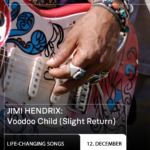 December 12: “Voodoo Child (Slight Return)” – Jimi Hendrix (1968)
One of rock history’s most iconic guitar tracks came to life under extraordinary circumstances. This is the story of “Voodoo Child (Slight Return)” – a song that blends improvisation, technical innovation, and pure chance.
On May 3, 1968, Jimi Hendrix and The Experience entered the Record Plant studio in New York with an ABC-TV film crew to shoot a documentary.
Hendrix suggested a spontaneous jam – and as the cameras rolled, the song was created almost “live” in the studio. Ironically, the 16mm film footage of this session has been lost, and a legendary moment was captured – then vanished.
One of the song’s most distinctive features is the swirling, “whooshing” effect – flanging. In 1968, there were no digital plugins, so the engineers created the effect manually: two tape machines played the same track while the speed of one was adjusted by pressing on the reel. The result? That unique “whooshing” sound no one could ever replicate.
The intro riff and explosive solos are driven by Hendrix’s mastery of the wah pedal, which he used to give the guitar a “talking” quality.
Why does it matter?
“Voodoo Child (Slight Return)” is more than just a song – it’s a moment of improvisation, technical creativity, and coincidence combined to create a milestone in rock history.
 December 13: “Toxic” – Britney Spears (2003)
Bollywood samples and futuristic vocal processing – pop far ahead of its time.
“Toxic” is more than just a catchy chorus and a sexy flight attendant look. It’s a story of luck, rejected offers, and a groundbreaking soundscape that almost didn’t make it onto Britney’s album In the Zone (2003).
The song’s journey began in Sweden with producer duo Bloodshy & Avant. They wrote the track specifically for… Janet Jackson! But she turned it down. Then it was offered to Australian pop star Kylie Minogue for her album Body Language. Kylie also declined—a decision she later called “the fish that got away.”
It wasn’t until Britney Spears heard the track that she saw its potential. She thought it was “really different”—and the rest is pop history!
What truly makes “Toxic” unique is its sound. The producers deliberately blended sounds from around the world to create an addictive, almost dangerous atmosphere that matches the song’s theme:
“Toxic” became a massive global hit and remains one of Britney’s most acclaimed songs. Next time you hear it, listen for the tiny details. It’s not just pop; it’s a masterpiece of musical composition.
 December 14: Unfinished Sympathy – Massive Attack (1991)
In 1991, one song put Bristol on the map and changed music history.
Unfinished Sympathy isn’t just a track – it’s a milestone that defined trip-hop and proved that electronic music could be deeply emotional.
During the recording sessions for Blue Lines, Shara Nelson spontaneously started singing a melody in the studio: “I know that I’ve imagined love before…”. The beat came quickly, and Jonny Dollar added synthetic strings. That was the beginning of something special.
Massive Attack wanted more than a typical club track. They brought in Wil Malone to arrange strings and ended up with a 40-piece orchestra at Abbey Road Studios.
The budget? Tight. Mushroom sold his car to fund the recordings. The result is a fusion of hip-hop beats, samples, and symphonic strings that still feels fresh today.
The music video is just as iconic: Shara Nelson walking through a Los Angeles neighborhood in one continuous shot. No effects, no cuts – pure authenticity.
Why was it groundbreaking?
In an era dominated by rave and house, Unfinished Sympathy arrived as an emotional counterpoint. It was called “dance music for the head” – music for the heart and mind, not just the dance floor. It topped charts, earned critical acclaim, and inspired a generation of artists.
During the Gulf War, the group temporarily dropped “Attack” from their name and released the single as Massive to avoid radio bans. Unfinished Sympathy still ranks among the greatest songs of all time. It’s proof that music can be both innovative and deeply human.
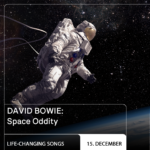 December 15: ‘Space Oddity’ – David Bowie (1969)
Few songs capture the spirit of the late 1960s like David Bowie’s breakthrough hit “Space Oddity.” What began as a deeply personal project about isolation became a timeless classic that perfectly tapped into the space race fever.
Bowie was captivated by Stanley Kubrick’s masterpiece 2001: A Space Odyssey (1968). He watched it countless times, drawn to its themes of loneliness and the hypnotic “trip sequence.” At the same time, he was dealing with a painful breakup with his girlfriend Hermione Farthingale. The result? A narrative about an astronaut leaving Earth – and the birth of Major Tom, a metaphor for alienation that Bowie would revisit throughout his career.
The single was released on July 11, 1969, just five days before Apollo 11 launched toward the Moon. Bowie’s label timed it perfectly to ride the wave of global space fever. But not everyone was thrilled: Some U.S. radio stations reportedly banned the track because its story of an astronaut lost in space felt too eerie during a real-life mission. Still, it became Bowie’s first major hit!
The production has its own legendary backstory:
From a simple acoustic idea, “Space Oddity” evolved into an orchestrated masterpiece – a song that still feels like a journey into the unknown.
 December 16: ‘Get lucky’ – Daft Punk (2013)
In 2013, Daft Punk, Nile Rodgers, and Pharrell Williams took the world by storm with a mega-hit that still makes us dance: “Get Lucky.” But do you know the incredible story behind the song that brought authentic disco sound back to the charts? It’s a story of perfectionism, musicianship, and the “human soul” in music!
Daft Punk wanted to create an album, Random Access Memories, that celebrated the magic of old vinyl recordings. Their mission was clear: use real instruments and session musicians instead of relying solely on samples. “Get Lucky” actually started as a simple demo on a Wurlitzer electric piano!
The magical moment happened when disco legend and Chic guitarist Nile Rodgers stepped into the studio. Daft Punk asked him to strip everything down except the drum track and let him create his own magic.
The result is the iconic, rhythmic “chicken-scratch” guitar that defines the entire song and became the centerpiece for everything else.
The result was a Grammy-winning, retro-futuristic masterpiece that fused the funk of the past with today’s production techniques. “Get Lucky” is not just a song; it’s a tribute to authentic instrument sound!
 December 17: Black Skinhead – Kanye West (2013)
Daft Punk + Kanye West = One of the rawest moments in modern music
When we talk about iconic collaborations, the story of Kanye West and Daft Punk on the Yeezus album is something truly special. Behind the scenes lies a tale of creativity, controversy, and sound that shattered the boundaries of hip-hop.
Daft Punk were the first ones Kanye contacted for the project. In a Paris studio, Guy-Manuel and Thomas recorded a mix of live and programmed drums on top of Kanye’s raw vocal tracks. Bangalter described the process as “very raw” – and you can hear it!
Fun fact: The drums come from unused material Daft Punk had recorded for their own album Random Access Memories. This gives the song a unique link between two groundbreaking projects.
Before the album was released, many believed the beat was sampled from Marilyn Manson’s The Beautiful People – because of its aggressive, industrial sound. But it was Daft Punk who created that chaotic energy.
The song is anything but classic hip-hop. It’s aggressive, industrial, and has a punk-rock aesthetic that was completely new for Kanye.
The title – often written as BLKKK SKKKN HEAD – is a direct provocation referencing the Ku Klux Klan. Kanye addresses race, identity, and societal pressure while reinterpreting the skinhead concept, which originally was multicultural and connected to Black music in the 1960s.
 December 18: ‘Paper Planes’ – M.I.A. (2007)
Did you know one of the most iconic tracks of the 2000s was born out of frustration with border control and stereotypes?
Here’s the wild story behind M.I.A.’s “Paper Planes” – a song that made the whole world dance to political satire.
1. Created in visa chaos
While working on her Kala album, M.I.A. was denied entry to the U.S. Her Sri Lankan roots and political lyrics made authorities nervous. “Paper Planes” became her ironic response: a track mocking the stereotype of the “dangerous immigrant.”
2. Punk DNA from The Clash
That haunting guitar riff? It’s sampled from The Clash’s “Straight to Hell” (1982). Brilliant move, because that song also tackles immigration and racism. M.I.A. and Diplo didn’t just borrow the sound – they borrowed the message.
3. Vocals in one take – before brushing her teeth (!)
M.I.A. recorded the vocals early in the morning in one take, without warming up, to capture a raw, nonchalant vibe. And the iconic kids’ chorus? Not professionals – just local kids she found in Brooklyn, adding an authentic street energy.
4. Gunshots and cash registers
The gunshot and cash register sounds in the hook were so controversial MTV censored them. But for M.I.A., they were the whole point: a satire of how “the foreigner” is seen as either criminal (gunshots) or a financial burden (cash register). By turning it into a pop hook, she made the world dance to its own prejudices.
“Paper Planes” became a global hit, especially after featuring in the Pineapple Express trailer. Ironically, a song that started as a critique of capitalism and border control ended up everywhere in mainstream media.
 December 19: Tears dry on their own – Amy Winehouse (2006)
Amy wrote the lyrics as a slow, melancholic ballad in producer Salaam Remi’s garden in Miami. She was reflecting on a relationship she knew was doomed – raw, honest words about heartbreak.
But Salaam Remi had an idea: the album Back to Black (2006) needed more tempo. So he took Amy’s sorrowful lyrics and layered them over the music from the Motown classic “Ain’t No Mountain High Enough” (Marvin Gaye & Tammi Terrell).
Imagine singing your saddest words to an upbeat Motown groove! Amy struggled to make it work and got so frustrated she reportedly shouted at Salaam: “Sing it yourself!” But when it finally clicked, magic happened: the contrast between the optimistic sound and the heartbroken lyrics gave the song a unique spark – and turned it into a classic.
Produced by Salaam Remi with rich, organic instrumentation:
The vibe is classic soul meets modern neo-soul, blending horns, gospel-inspired backing vocals, and a tight, dry rhythm section. Want to hear how the song was originally intended? The raw ballad version appears on the posthumous album Lioness: Hidden Treasures (2011) – no Motown sample, just pure jazz intimacy.
 December 20: Windowlicker – Aphex Twin (1999)
Some music is a puzzle, a provocation, and a work of art all in one. Windowlicker by Aphex Twin is all that – and more.
Run the track through a spectral analysis, and his signature grin appears as a visual imprint. And in the title track, there’s even a spiral toward the end – only visible to those who dig deep into the spectrogram.
Windowlicker is a sonic labyrinth: twisted rhythms, distorted vocals, and an aesthetic that’s both beautiful and grotesque. Those sighing, almost “erotic” vocals? That’s James himself – digitally manipulated to sound feminine and otherworldly.
Gear nerds will love this: classics like the Roland MKS-80 (Super Jupiter) and Yamaha DX11 are believed to have played a role, alongside James’ own software experiments.
Director Chris Cunningham created a 10-minute music video parodying the flashy American R&B and hip-hop clips of the era – complete with limousines, luxury, and dancing women. But here’s the twist: every woman has Richard D. James’ face. A grotesque, humorous jab at the “faceless” techno scene – and a bold statement about individuality.
“Windowlicker” is English slang for a mentally challenged person – a provocative, darkly humorous choice that underscores the uncompromising attitude of the project.
 December 21: Bad guy’ – Billie Eilish (2019)
One of the most iconic pop hits of recent years didn’t come from a high-end studio – it was created in a bedroom.
Billie Eilish and her brother Finneas O’Connell wrote and produced Bad Guy at home, using minimal gear and maximum creativity.
The result is track that broke pop conventions, topped charts worldwide, and won a Grammy for Song of the Year.
The track’s sonic identity is deliberately shadowy and unconventional:
Bad Guy didn’t just chart – it changed the game. It topped the Billboard Hot 100, ended Lil Nas X’s record-breaking run with Old Town Road, and became a cultural phenomenon. The most impressive part is that only four people were behind the entire album: Billie, Finneas, mixer Rob Kinelski, and mastering engineer John Greenham.
 December 22: The untold story behind Outkast’s “Hey Ya!” – More than just a party anthem
We all know “Hey Ya!” as one of the most infectious hits of the 2000s. It’s the song that made us dance, shout “Ice cold!” and shake it like a Polaroid picture.
But behind the upbeat vibe lies a fascinating story of innovation, hidden melancholy, and cultural influence that still resonates today.
From idea to icon
André 3000 started writing “Hey Ya!” back in 2000 during the Stankonia tour. His goal? To create something that didn’t sound like traditional hip-hop – or pure pop. The result was a genre-bending masterpiece blending funk, indie pop, and hip-hop energy.
Fun fact: André played almost every instrument himself – guitar, keyboards, drum programming, and vocals. The only outside contribution? A synth bass line by Kevin Kendricks.
The sound – A bold experiment
Lyrics – A party song with a dark core
Beneath the cheerful “shake it like a Polaroid picture” chant lies a bittersweet truth. Lines like “If nothing is forever, what makes love the exception?” reveal the song’s real theme: relationships held together by habit, not love.
André himself described it as “a sad song disguised as a party hit.” That contrast is what makes “Hey Ya!” so powerful – it’s joy and heartbreak in the same breath.
The video & cultural wave
Beatles-inspired visuals: The music video, directed by Bryan Barber, features André playing eight different band members in a retro TV performance – a nod to The Beatles’ Ed Sullivan Show era.
Impact & legacy
“Hey Ya!” wasn’t just a hit – it was a cultural phenomenon:
“Hey Ya!” is more than a feel-good anthem. It’s a piece of pop art-layered, experimental, and timeless.
 December 23: “Smooth” – Carlos Santana (1999)
In 1999, something extraordinary happened: Carlos Santana, the guitar legend from the Woodstock era, returned with a hit that shook the music world. “Smooth” was more than just music, it became a cultural phenomenon.
Santana hadn’t had a hit in over 15 years. But with the album Supernatural and the single “Smooth,” he was back at the center of the music scene.
The song spent 12 weeks at #1 on the Billboard Hot 100, won three Grammy Awards, and made Santana relevant to an entirely new generation.The sound of latin rock
“Smooth” is more than a pop song – it’s a rhythmic celebration. Layers of congas, timbales and horn stabs give the track its warmth and energy. This percussion is the heartbeat of the song, creating the Latin pulse that drives it forward.
Rob Thomas wrote the lyrics as a tribute to his wife, Marisol Maldonado – his Spanish Harlem Mona Lisa.
His raw, soulful vocals meet Santana’s singing guitar, and together they create a sound that feels timeless.
Mixer David Thoener made a bold choice: Santana’s guitar would dominate the soundscape. To give space to his iconic tone, horns and piano were thinned out in the midrange.
The result is a clear, powerful mix where guitar and vocals shine without losing the rhythmic heat of the percussion.
“Smooth” blends rock, Latin, and pop into one perfect cocktail. It has groove, attitude, and a melody that sticks from the first second.
A comeback that spoke for itself:
 December 24: 110 years of the loudspeaker – and a song that changed the world
On December 10, we celebrated the loudspeaker’s 110th anniversary. Danish Peder L. Jensen and American Edwin Pridham made it possible to turn electrical signals into sound – a vision that would bring music, news, and stories closer to people and into the (then) quiet living rooms.
It became one of the most successful inventions ever. Today, the loudspeaker is everywhere: in homes, cars, phones, supermarkets etc. With its success came a challenge: silence has become a scarce commodity.
In a world where we are constantly bombarded with sound, it’s necessary to ask: What are we exposing our ears to? Is it quality, or just more noise? At System Audio, we believe in being critical – choosing sound that enriches our lives, not pollutes it.
No one said it better than John Lennon.
In 1971, he wrote Imagine, a song that became a global symbol of hope and peace. Behind its simple piano intro lies a deep story: inspired by Yoko Ono’s art, produced with Phil Spector, recorded in Ascot, and polished in New York. Lennon dreamed of a world without borders, religion, and possessions – a world in harmony. A vision that fits the loudspeaker’s original idea: to bring people together through sound.
But we live in a noisy world. That’s why it’s more important than ever to choose sound thoughtfully. Music can create calm, joy, and meaning – if we give it space.
So next time you listen, ask yourself: Is this good for me? Is it worth listening to?
At System Audio, we work to give you the experience the loudspeaker was created for: pure, engaging sound that speaks to the heart.
Merry Christmas – Turn down the noise and remember to give silence and great sound a place in your life.